


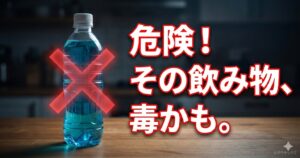
[Conclusion] Refilling PET Bottles is a “Trap for Your Family”
 クロマル
クロマル プラチナちゃん
Answer First: Iron Rules for Saving Lives
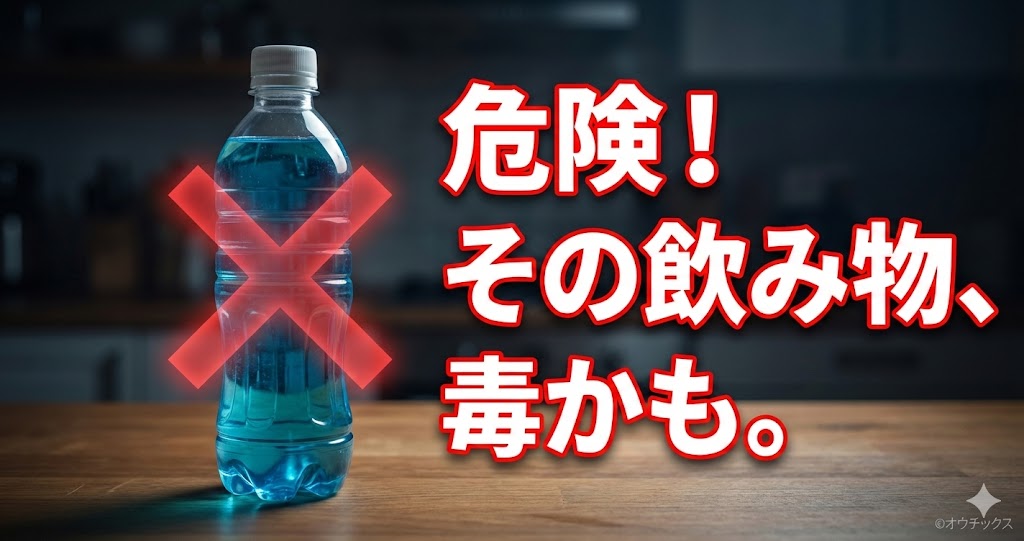
Transferring detergents or chemicals into PET bottles creates an “accidental ingestion trap” that is extremely difficult for children and the elderly to avoid. The only way to prevent accidents is to “never store them in anything other than their dedicated containers.”
Chapter 1: Why Do “Drinking Mistakes” Happen? Deconstructing the Structure of Misidentification
クロマル ミントちゃん
When people are thirsty, they recognize a “drink” just by looking at the “shape of the PET bottle” before reading the label in detail, and unconsciously bring it to their mouths. Once a liquid is put into a PET bottle, it is already labeled as a “drink” rather than “poison” in the brain’s system.
| Comparison Item | Beverage PET Bottle | Dedicated Refill Container |
|---|---|---|
| Brain Recognition (Affordance) | Automatically judged as “Drink” | Cautioned as “Chemical/Detergent” |
| Risk of Accidental Ingestion | Extremely High | Low |
| Safety Measures | None (Easily opened) | Child locks, etc., may be available |
Chapter 2: Physical Damage Caused by Transferred “Deadly Poison”
プラチナちゃんミントちゃんA middle-aged family member accidentally ingested detergent containing fabric softener that another family member had transferred to a PET bottle. It caused chemical pneumonitis (vomit entering the trachea and chemically damaging the lungs), forcing hospitalization for over 30 days. This is a case where, even after discharge, their ability to live daily life (ADL) declined significantly, to the point where they could not move as before.
Cases have been reported where someone was hospitalized after taking a sip of insecticide transferred to a PET bottle, thinking it was tea, and a case (hospitalized for 5 days) where a PET bottle containing thinner placed in a garage fell over and the smell came from a child’s mouth.
クロマルChapter 3: Survival Actions: Emergency Procedures in Case of “Accidental Ingestion”
プラチナちゃんクロマルミントちゃん- 1. Do NOT force vomiting: This is the top priority to prevent secondary damage.
- 2. Rinse the mouth: Rinse any remaining substance from the mouth with water and have them spit it out without swallowing.
- 3. Check substance and amount: Confirm “what,” “when,” and “how much” was ingested, and secure the container.
- 4. Contact Poison Center: Immediately contact the Japan Poison Information Center below and follow their instructions.
Japan Poison Information Center (General Public / 24 hours / Free)
Osaka Poison 110: 072-727-2499
Tsukuba Poison 110: 029-852-9999
*Please provide the following information when consulting: Age, weight, product name of ingested item, ingredients, amount, time, current symptoms (consciousness, breathing, vomiting, etc.)
| Step | Action | Purpose |
|---|---|---|
| 1 | Contact Poison 110 / 119 | Obtain professional instructions (Decision on whether to induce vomiting) |
| 2 | Do not vomit; rinse mouth | Prevent additional mucosal damage and inflow into lungs |
| 3 | Secure the actual item (container) | Rapid identification of poison and detoxification by doctors |
Chapter 4: Household “Zero Risk” Management: 3 Iron Rules
プラチナちゃんクロマル- Iron Rule 1: Strict Use of Dedicated Containers: Never transfer to beverage PET bottles for any reason. If refilling, use only dedicated bottles designed to “prevent accidental ingestion.”
- Iron Rule 2: Physical Separation of Storage Locations: Do not place “food” and “chemicals” on the same shelf. Do not just separate them by upper and lower shelves; separate them completely, such as in different rooms or outdoor sheds.
- Iron Rule 3: Explicit Warnings: If absolutely necessary, attach highly visible “warning labels” in multiple places. Use waterproof labels that do not peel off easily, and list the content name, ingredients, and Poison 110 number.
Frequently Asked Questions (FAQ)
- Q. Is it okay to wait and see if it’s just a small amount (less than a sip)?
- A. No. Ingredients such as surfactants and insecticides can cause chemical pneumonitis if even a small amount enters the trachea. Do not judge by yourself; contact Poison 110 immediately.
- Q. I heard that drinking milk is good when accidental ingestion occurs?
- A. Milk may be effective in some cases, but depending on the ingredients, there is a risk that it may speed up absorption. Always seek instructions from Poison 110 before making a decision.
- Q. Can I prevent it if I write “Detergent” in big letters on the PET bottle?
- A. You cannot prevent it. The brain judges by “shape” before reading text. Stopping the transfer itself is the only correct answer.
- Q. Can I hold the manufacturer responsible if an accident occurs after refilling?
- A. It is difficult. Refilling into beverage bottles significantly deviates from the “correct usage.” Relief under the PL Law (Product Liability Act) is difficult, and it becomes the self-responsibility of the person who refilled it.
Summary: Protecting Family from Disadvantage with the Shield of Wisdom
Key Points of This Article
- Refilling PET bottles is a “life trap” for your family.
- In case of accidental ingestion, NEVER force vomiting.
- Immediately register the “Poison 110” number on your refrigerator or smartphone.
- [Within 5 minutes]: Check PET bottles throughout the house and immediately dispose of any with unknown contents.
- [Within 1 week]: Review storage locations for detergents, etc., and physically separate them from food.
- [Right Now]: Register Poison 110 (Osaka: 072-727-2499 / Tsukuba: 029-852-9999) in your phone book.
プラチナちゃんミントちゃんクロマルPlease stop the tragedy of “I could have prevented it if I had known” with your own hands.
References / Related Links
National Consumer Affairs Center of Japan: Stop transferring contents to beverage PET bottles! – Accidental ingestion of detergents and insecticides is occurring (Published February 4, 2026) (Last access confirmed: February 4, 2026)
Japan Poison Information Center: First Aid and Consultation Guide for General Public
Consumer Affairs Agency: Product Liability (PL) Act Guidelines
Ministry of Health, Labour and Welfare: Preventing Accidental Poisoning at Home



Comments