


2026 Lower House Election | “Livelihood Self-Defense” Guide to Surviving a Snowy Polling Day: Thinking About MP Costs and Household Defense Tactics Amid the Azumi Scandal
“The 2026 Lower House election falls on a snowy day, so voting is a hassle,” or “No matter who I vote for, my life won’t change.” If you feel this way, it is synonymous with abandoning the “returns” you should rightfully receive due to information asymmetry.
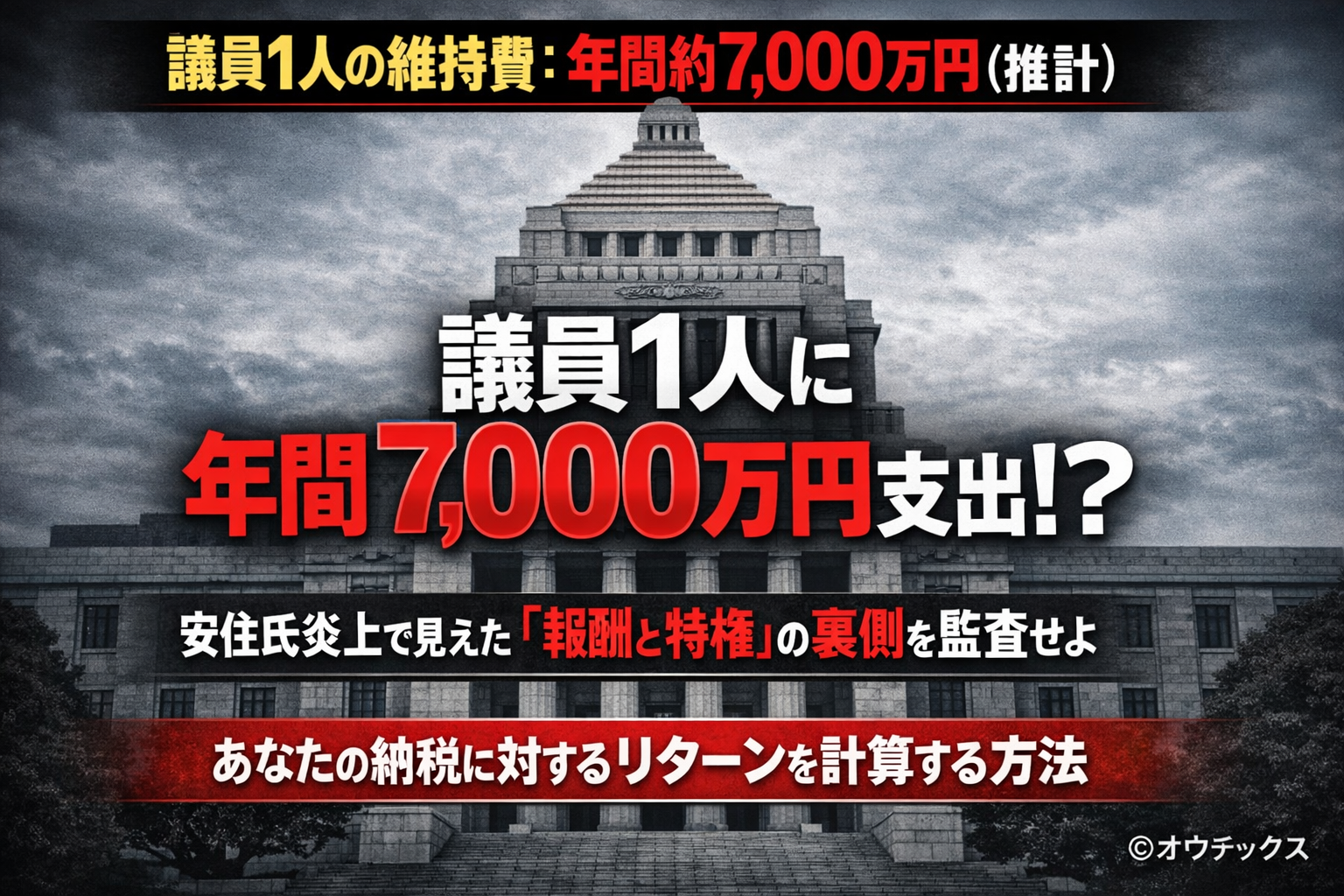
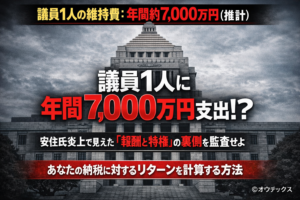
On February 8, 2026, the day of the Lower House election, heavy snow at warning levels is predicted. Simultaneously, we must audit the reality that approximately “70 million yen in public funds per year (estimated)” is invested in a single member of parliament when combining annual salary and various expenses. This article provides a thorough explanation of the actual state of compensation as seen from the social media firestorm surrounding Jun Azumi, a comparison of the policies of major political parties, and survival actions to protect your rights from the physical threat of heavy snow. *Note: Cost calculations in this article are estimates based on public data.
Conclusion: Tomorrow’s vote is your audit right against a “high-cost structure”
Conclusion: Voting is “Household Defense” itself
When totaling annual salary (Saihi) and term-end allowances, as well as Research, Study, Public Relations, and Stay expenses, Legislative Office expenses, public secretary salaries, and the effective reduction in the burden for travel and housing, it is estimated that approximately 70 million yen per year is spent from public funds for each member of the Diet. Tomorrow’s single vote is your only legal right to “select” those who intend to provide a return that protects your household and life against this massive “investment.”
1. The truth behind the firestorm: How much are we paying per Member of Parliament?
 ミントちゃん
MP Cost Audit Data: Estimated Breakdown of Approximately 70 Million Yen Per Year
Based on the “Act on Annual Salary, Travel Expenses, and Allowances of Members of the Diet,” we have organized the main costs paid to members. Let us audit the reality of the actual “Annual Income and Expenses of Diet Members” behind the frugal performances on social media.
| Item | Estimated Annual Amount | Audit Point (Self-Defense Perspective) |
|---|---|---|
| Annual Salary & Term-end Allowance | Approx. 22 million yen | The annual income of a general member, including term-end allowances, is roughly 21 to 22 million yen. |
| Research, Study, Public Relations, and Stay Allowance | 12 million yen | Tax-free. Reporting of usage and the return of remaining funds became mandatory in August 2025, but it remains a high “activity fund.” |
| Legislative Office Expense | 7.8 million yen | Paid to the parliamentary group. It is not an individual salary, but it is a robust budget supporting the member’s policy planning. |
| Public Secretary Salaries (3 persons) | Approx. 25 million yen | Fully covered by national funds (taxes). These are personnel costs for professionals who support policy planning. |
| Free JR Pass & Air Tickets | (Millions of yen scale) | Under the system, free passes for all lines are provided, and most transportation costs are covered by public funds. |
Bargain Housing: The hidden salary of “Rent Disparity” in prime downtown areas
For example, a Diet member’s residence in Akasaka, Minato-ku, is set at approximately 124,000 yen per month for a 3LDK. Since the private market rate in the surrounding area can range from 400,000 to over 1 million yen depending on conditions, it is extremely cheap compared to private properties. We must face the fact that this “reduction of fixed costs” has been criticized as a cause for the gap in living standards perception.
2. [Objective Comparison] List of Promises on “Money and Disaster Prevention” by Major Parties
 プラチナちゃん
From the official manifestos of each party, we have audited items directly linked to “disposable income” and “physical survival.” Use this “liberal translation” based on official wording to help you choose in the election to protect your household.
| Political Party | Impact on Household/Take-home Pay | Weapons for Disaster Prevention/Infrastructure |
|---|---|---|
| Liberal Democratic Party (LDP) | Expansion of the tax system to promote wage hikes, job creation in new industries through GX investment. | National Resilience. Concentrated repair of aging infrastructure. Swift support during extreme disasters. |
| Centrist Reform Union | Review of the burden regarding the “1.3 million yen wall,” income tax cuts for salaried workers. | Legal mandating of the installation of TKB (Toilets, Kitchens, Beds) in evacuation centers. |
| Nippon Ishin no Kai | 30% reduction in the number of seats and annual salary of members, consideration of reducing the burden of social insurance premiums for the working generation. | Voucher system during disasters, utilizing private sector disaster prevention capabilities as evacuation centers. |
| Democratic Party for the People (DPP) | Raising the basic deduction to 1.78 million yen, lowering electricity bills by suspending the renewable energy levy. | Household defense by improving energy self-sufficiency, increasing the infrastructure maintenance budget. |
*Manifesto contents may be updated during the election period. Please always check the latest information via the PDF (primary source) on each party’s official website.
3. [Price of Abstention] Estimation of “Lifetime Loss” caused by not voting
The idea that “it won’t change even if I’m the only one who doesn’t go” could result in preserving a high-cost structure that is disadvantageous to your household budget. We have visualized the difference in policies decided during a four-year term using an original scenario by the Ouchix Investigation Lab.
| Year | Estimated Cumulative Loss | Main Factors (Audit Scenario) |
|---|---|---|
| 1st Year | Approx. 120,000 yen | Rise in social insurance premiums, opportunity loss for direct support against high prices. |
| 4-Year Total | Approx. 520,000 yen | Review of tax deductions, increased spending due to insufficient measures to suppress utility costs. |
*This estimate is a simulation based on past trends in legal amendments and is not a confirmed future value.
4. [Survival Self-Defense] Safe Voting Actions for the “Warning-Level Heavy Snow” on February 8
 クロマル
クロマルChecklist for Increasing Voting Success Rate on Snowy Roads (Practical Edition)
Traveling to a polling station on snowy roads takes several times longer than usual. Confirm the optimal solutions for “Voting Day Snow Items” and “How to Walk” to avoid physical risks.
- Equipment: Anti-slip shoes (snow boots recommended). A backpack to keep both hands free. Sneakers are strictly prohibited.
- Action: Road surface freezing accelerates rapidly in the afternoon. Complete your vote during the morning whenever possible.
- Walking: Use the “Penguin Walk,” imagining putting your entire sole on the ground with small steps. Think of manhole covers and white lines on crosswalks as “sheets of ice.”
- Information: Some municipalities may consider moving up voting hours. Check the municipality’s website or social media immediately before leaving.
Always check the latest warnings and advisories on the Japan Meteorological Agency’s official website or your local municipality’s disaster prevention information. If going out is physically dangerous, prioritize your life. Your survival guarantees your “audit right” for future politics.
Frequently Asked Questions (FAQ)
- Q. Is there any remedy if I cannot go to the polling station due to snow?
- A. Under the current system, voting on a later date solely due to weather is not permitted. However, if a polling station is closed due to a large-scale disaster, measures such as a re-election may be taken.
- Q. Is there a criterion for deciding who to vote for in the “shortest” time?
- A. Choose the single “heaviest expense (e.g., electricity bills)” in your household budget and audit the party that most specifically shows the solution with numbers.
- Q. What is the total public cost for all members of the Diet?
- A. Based on a rough estimate from the number of members and the public cost per person, it reaches the scale of hundreds of billions of yen. The role of the audit called voting is to confirm whether these funds are being used correctly.
Summary: To protect your household, put on your boots and go “Audit”
Important points of this article (Risk Avoidance)
- Approximately 70 million yen in public expenditure per MP annually (estimated). Audit the policy return that matches that investment.
- Fear of warning-level heavy snow on February 8. Abstention could result in preserving a high-cost structure.
- Voting is not just the exercise of a right, but a “defense action” to avoid livelihood risks.
Actions to Take Next
- Within 5 minutes: Re-confirm the latest manifestos (review of the 1.3 million yen wall, tax reduction measures, etc.) on each party’s official website.
- Within 10 minutes: Check the risk of snow accumulation and freezing on the way to the polling station via the Japan Meteorological Agency’s “Kikikuru.”
- Right now: Prepare your polling station admission ticket, ID, and “snow shoes” at the entrance.
References & Related Links
Act on Annual Salary, Travel Expenses, and Allowances of Members of the Diet (e-Gov)
Japan Meteorological Agency | Disaster Prevention Information (Official)
House of Representatives Official Website (Audit of Member Information)
*Manifesto and system contents of this article are based on information as of February 2026. Manifesto contents may be updated before or after the election. Please always check the latest information on each party’s official website.



Comments